


How We Generate High-Intent Debt Settlement Leads Using Google Ads & Meta Ads

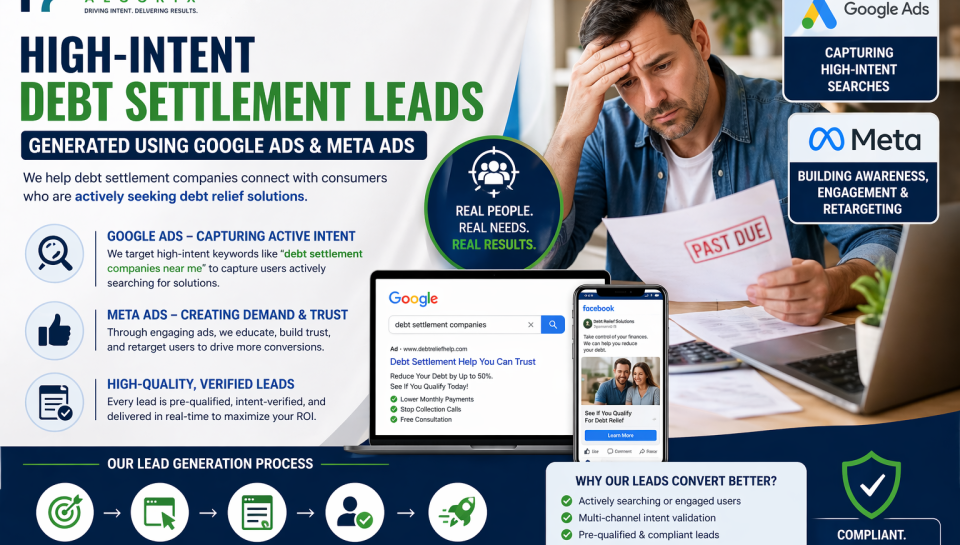
In the highly competitive financial services space, debt settlement leads are only valuable when they come from consumers who are actively seeking help—not just browsing.
At Heritus Algorix, we focus on delivering buyer-intent, qualified debt settlement leads using a powerful combination of Google Ads and Meta Ads (Facebook & Instagram). Our strategy is built to attract users who are already feeling financial pressure and are ready to explore solutions.
💳 Why Debt Settlement Leads Are High-Value
Consumers searching for debt relief services are usually:
- Struggling with high credit card balances
- Facing collection calls
- Looking for lower monthly payments
- Actively comparing settlement options
This means they are emotionally and financially motivated, making them far more likely to convert—if reached correctly.
🚀 Our Core Strategy: Intent-Driven Lead Generation
We don’t rely on bulk traffic or generic campaigns. Instead, we build a structured funnel that captures high-intent users at the right moment.
🔍 1. Google Ads – Capturing Active Search Intent
Google Ads plays a critical role in targeting users who are already searching for solutions.
We target keywords like:
- “debt settlement companies near me”
- “reduce credit card debt legally”
- “debt relief programs USA”
Our approach includes:
- High-converting landing pages
- Strong ad copy with emotional triggers
- Call extensions & click-to-call campaigns
- Location & device targeting
👉 These users are bottom-of-funnel prospects—ready to take action.
📱 2. Meta Ads – Creating Demand & Retargeting
While Google captures intent, Meta Ads helps us:
- Generate awareness
- Educate users
- Retarget interested prospects
Campaign types we run:
- Lead form ads (instant forms)
- Video ads explaining debt relief benefits
- Retargeting ads for website visitors
Messaging examples:
- “Reduce Your Debt by Up to 50%”
- “See If You Qualify for Debt Relief Today”
- “Stop Collection Calls Now”
👉 This builds trust and familiarity, increasing conversion rates.
🎯 3. Conversion-Optimized Landing Pages
Traffic alone doesn’t convert—experience does.
We design landing pages that:
- Focus on a single goal (lead capture)
- Use trust signals (testimonials, compliance disclaimers)
- Include short forms to reduce friction
- Offer clear CTAs (Call Now / Get Free Consultation)
🧠 4. Smart Lead Qualification System
Not all leads are equal.
We filter leads based on:
- Minimum debt amount
- Employment status
- Location eligibility
- Intent signals (form behavior, time on page)
👉 This ensures only serious prospects are passed to buyers.
⚡ 5. Real-Time Delivery & Speed-to-Lead
In debt settlement, speed matters.
We deliver leads via:
- API integrations
- CRM systems
- Live call transfers
Faster response = higher close rates.
💡 What Makes Our Leads Different?
✔️ High-intent users actively seeking help
✔️ Multi-channel validation (Google + Meta behavior)
✔️ No recycled or outdated data
✔️ Compliance-focused campaigns
✔️ Scalable volume with consistent quality
📈 Results You Can Expect
With Heritus Algorix, partners typically see:
- Higher contact rates
- Better lead-to-sale conversion
- Lower cost per acquisition
- Increased ROI on marketing spend
🔑 Real Buyer Signals We Capture
We identify users who:
- Search for debt relief solutions
- Click on settlement-related ads
- Fill out consultation forms
- Request callbacks or immediate assistance
These are not cold leads—they are problem-aware and solution-ready.
🏁 Final Thoughts
Debt settlement is a sensitive and high-stakes service. Success depends on reaching the right audience at the right time with the right message.
By combining the power of Google Ads (intent capture) and Meta Ads (demand generation + retargeting), Heritus Algorix delivers qualified, buyer-ready debt settlement leads that convert.
📞 Ready to Scale Your Debt Settlement Campaigns?
Partner with Heritus Algorix and get access to high-quality, compliant, and conversion-focused leads that drive real business growth.
Your next client isn’t just browsing—they’re actively looking for help.